
Travel Advisory
Mali has introduced reciprocal visa bond requirements for U.S. citizens, requiring deposits of $5,000 – $10,000 starting October 23, 2025, in response to similar measures by the United States.
A trip to Mali, where you trace the Niger River’s lifeline through ancient cities like Timbuktu, meet Tuareg nomads, Bambara royalty, and Bozo fishermen, and witness traditions shaped by centuries of trade, faith, and resilience.
Along the way, you’ll explore the local markets, UNESCO-listed mosques, remote villages, and sacred caves, while seeing the landscapes ranging from desert dunes to fertile riverbanks.
Upon arrival at Bamako airport, you will be met by our staff and transferred to your hotel. Bamako, the capital city of Mali, is located on the Niger River. It is a historical and cultural center with arts, commerce, and trade.
Overnight: Hotel Tamana or Loft BBL
Today is dedicated to discovering Mali’s capital. Bamako is located in Niger, one of two large rivers of Africa that runs through Mali. The city was founded in 1640, but did not really begin to grow until the beginning of the French colonial period in 1898. Mali is a country of many small tribes, each with their own exuberant styles of clothing and jewelry.
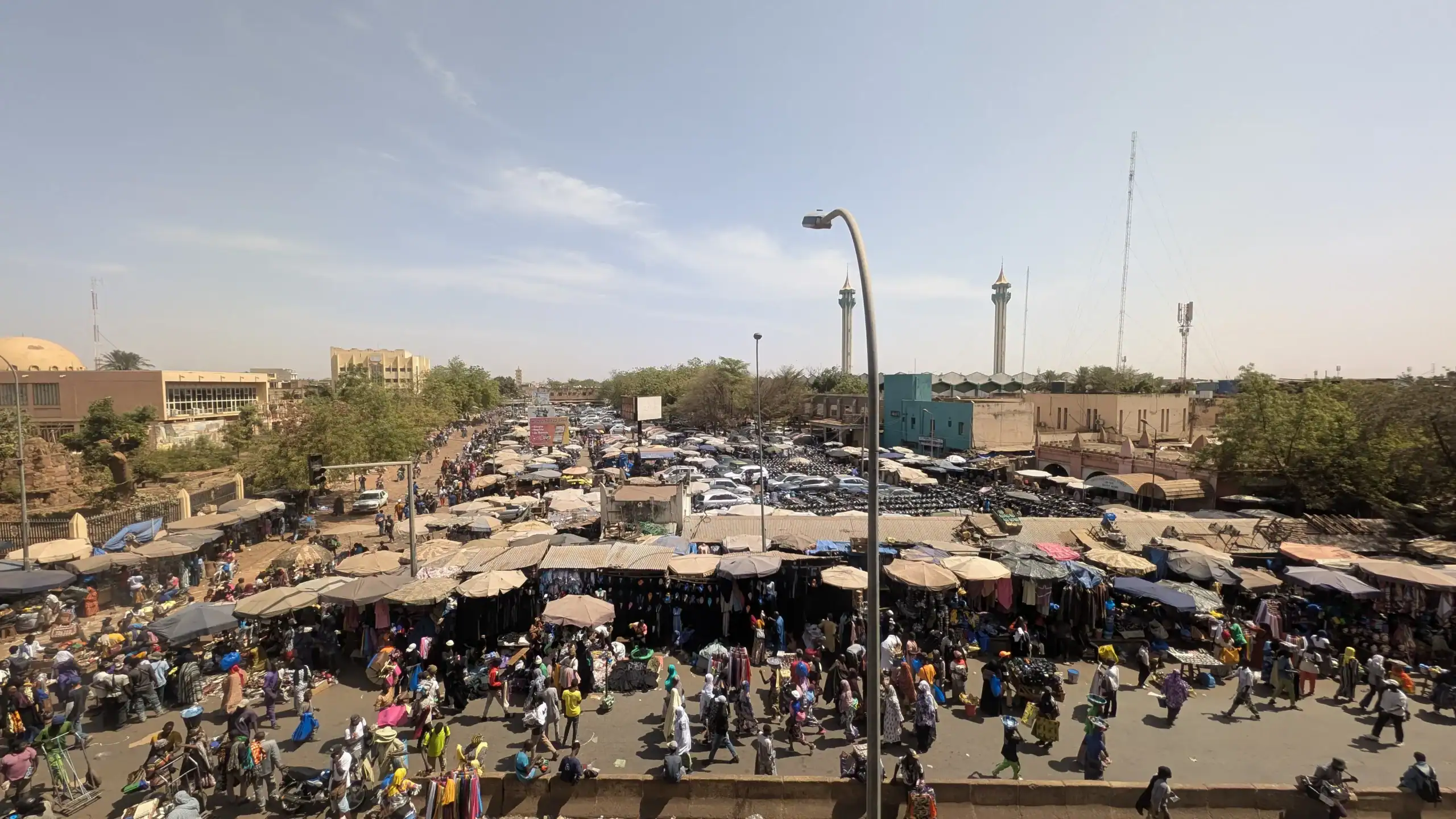
There is no better place to see this colorful diversity that the streets and markets of Bamako. Bamako has a large arts and crafts center where sculptors, cellars, gold workers, jewelers and metallurgists display their products and skills.
Another highlight of its promenade is the Grand Marché, or ‘Big Market’, where you can spend hours exploring the hundreds of stalls. From sculptures and cassettes to fabrics and gold, to the variety of products is impressive.
A market area entirely dedicated to traditional African medicines. Vodoo market Here you will find receding heads of birds, macaques and crocodiles together with skins of lizards and others.
Overnight: Hotel in Bamako
Take a flight and arrive in the afternoon visit the city of Timbuktu, meet the local population and the Imams of the great mosque of Timbuktu, cultural exchange.
Overnight: Hotel in Timbuktu
After breakfast go on a city tour learn about how the cultural and economic routes between the Mediterranean and the Gulf of Guinea, and Timbuktu being a mecca for caravans crossing the desert. We will spend a day exploring this city and visiting each of the city’s neighborhoods.
We will visit the tombs of Muslim saints, Sudanese-style mosques, and some Tuareg communities to learn more about the life of these Saharan people. The different Mosques.
Overnight: Hotel in Timbuktu
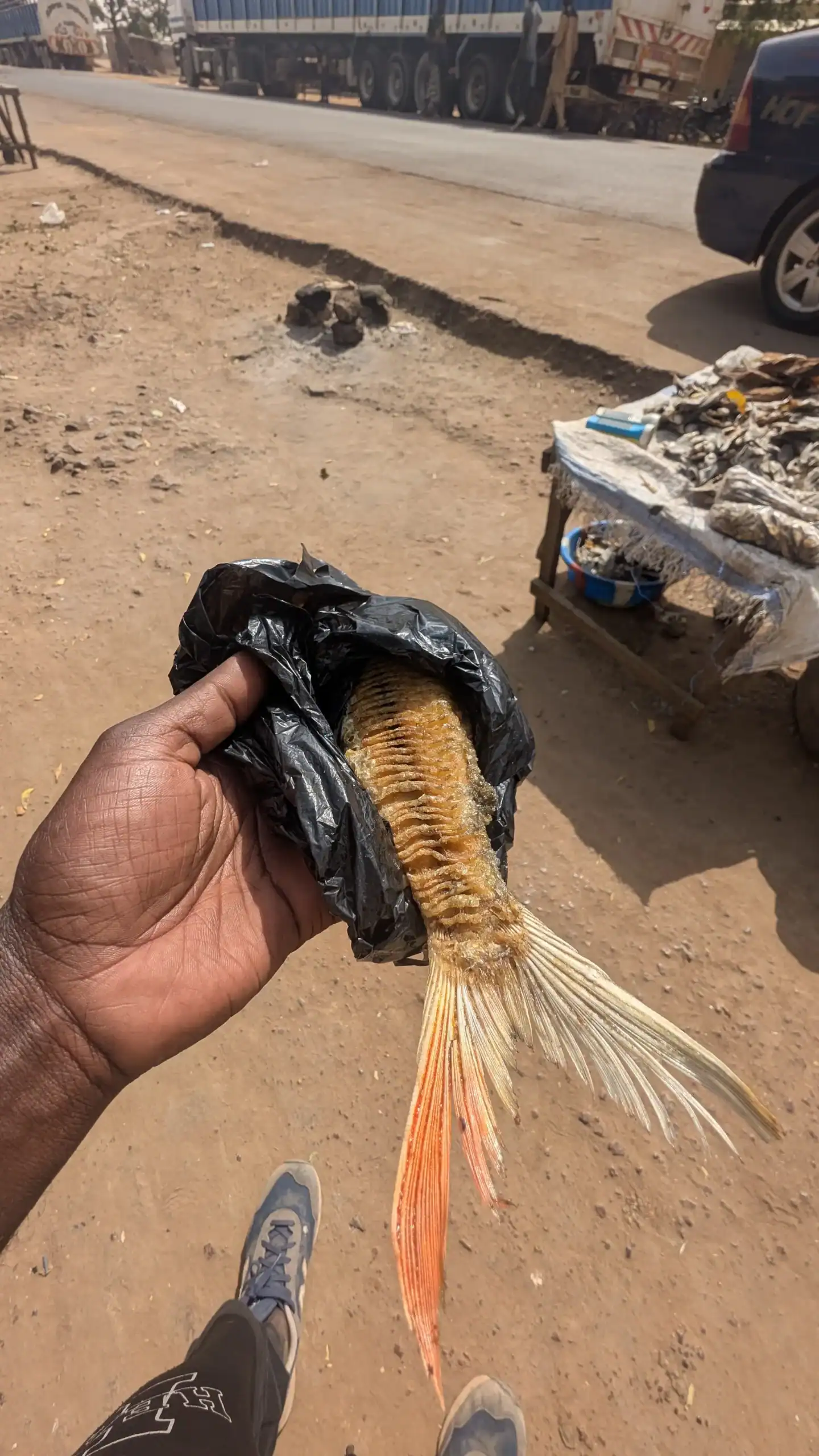
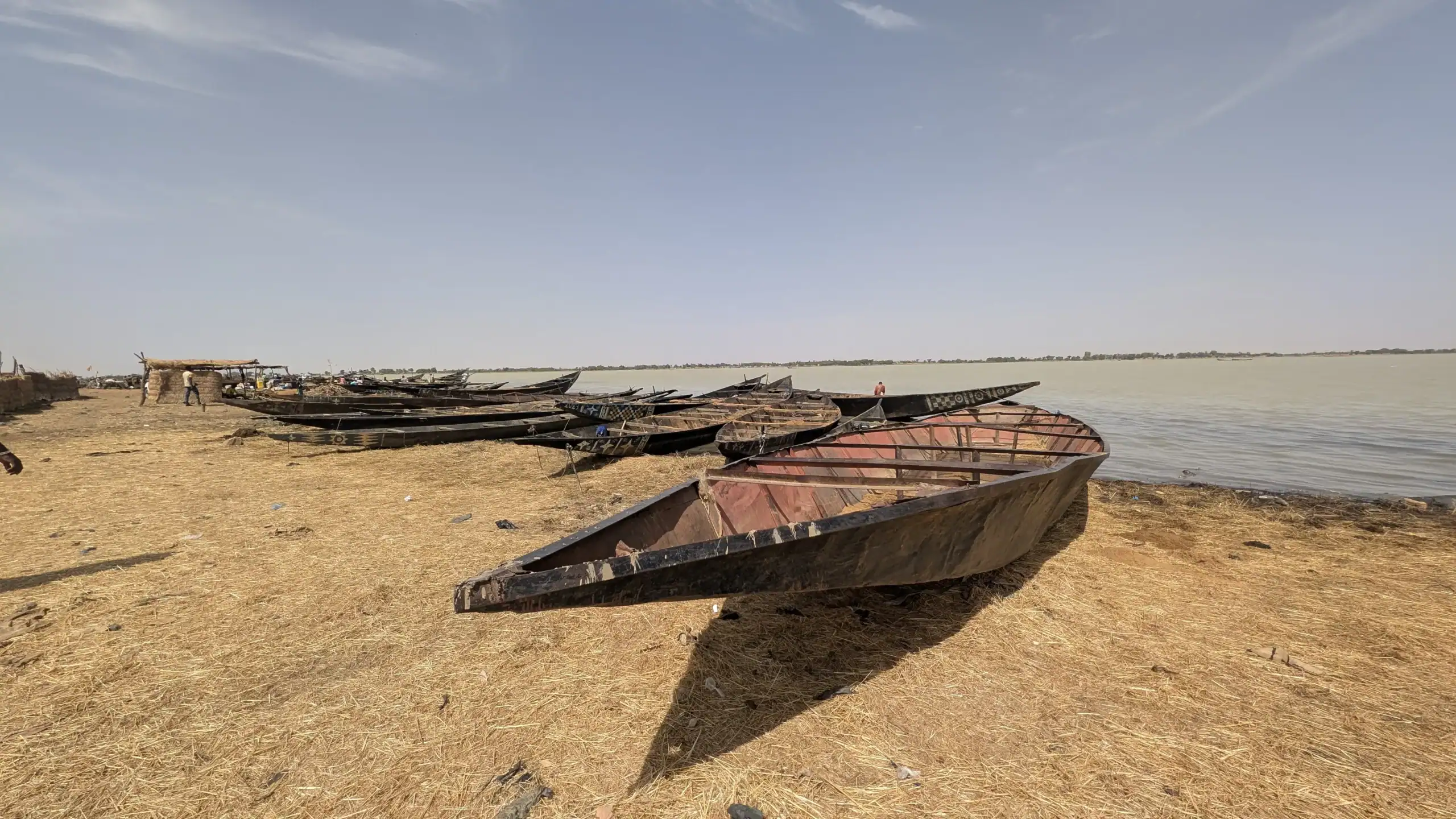
This morning, a drive across the Sahel takes you south to Mopti, with a stop in Sévaré. Once in Mopti, you’ll meet the local village chief, visit the central mosque, explore the fish port and the boat manufacturing workshop.
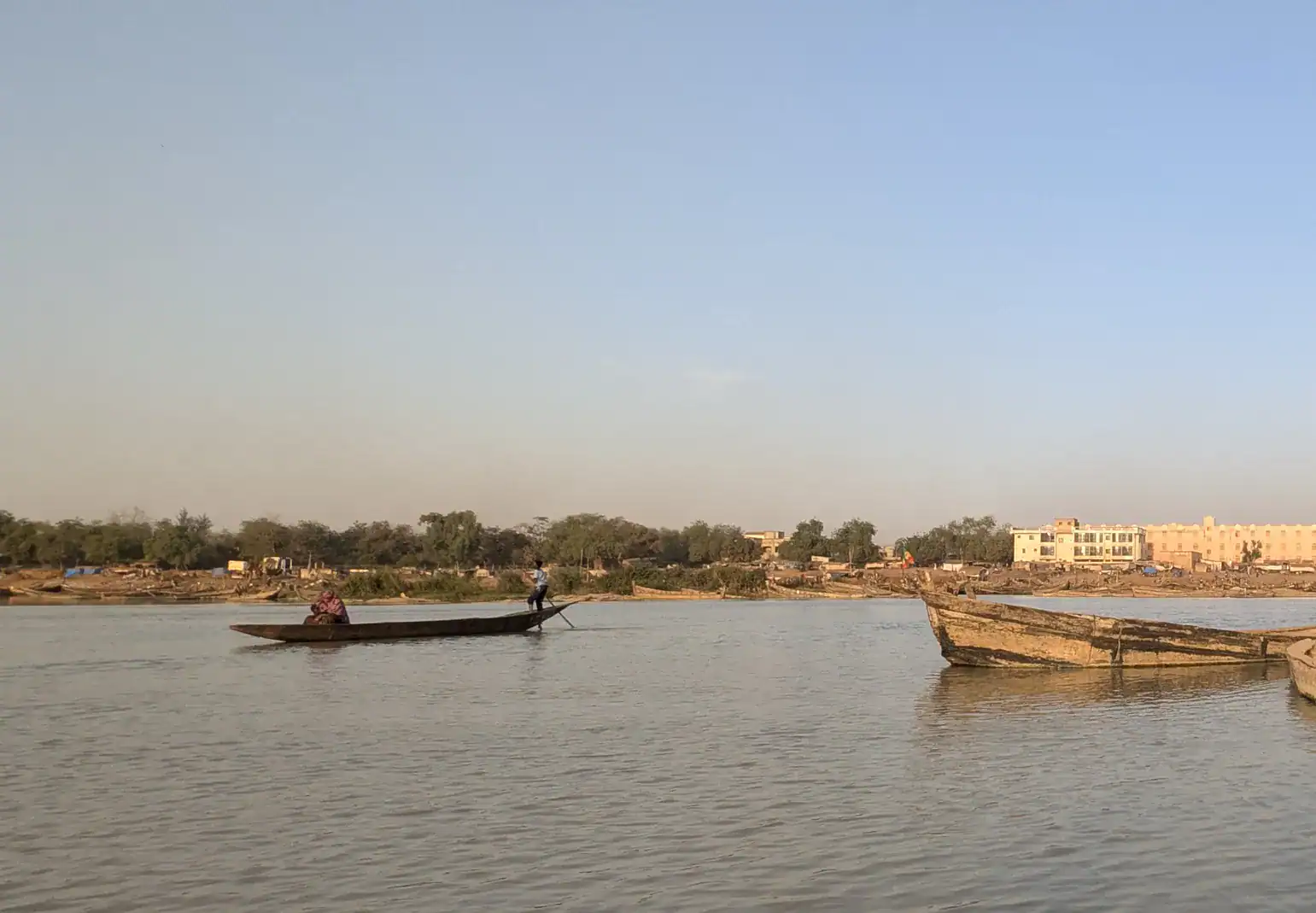
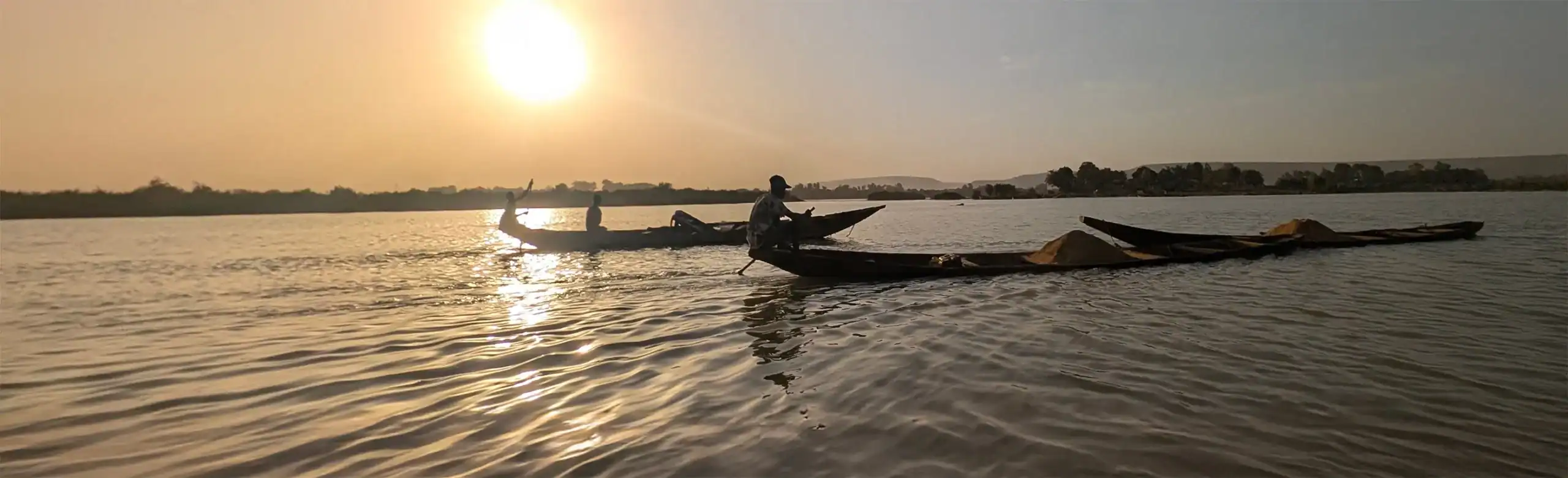
As the sun sets, take a relaxing boat ride along the Bani and Niger Rivers.
Overnight: Hotel in Mopti
After breakfast, drive through Mali’s beautiful countryside and visit a few villages along the way.
Arrival in Djenné, and visit the tomb of the young maiden who was sacrificed for the prosperity of the city in the 12th century, the great mosque of 1906, the cooperatives that produce the traditional scarves – called Bogolan -, painted with dyes obtained from the bark of trees.
We will walk through the narrow streets and the Koranic schools where children learn the verses of the Koran. We will try our city tour with the weekly market day.
Overnight: Hotel in Djenné
Continue your journey to San and along the way, visit the twin mosque of Djenné, located in San. It was built by the Djenné population, who are originally from the city of San.
After the visit, continue to Ségou. In the afternoon, we will visit the NDOMO workshop, which produces bogolans and indigo. A a boat ride on the Niger River will take us to the Bozo Islands and interact with the local population.
Overnight: Hotel in Ségou
This morning, will visit the ancient village of Sekoro, where we will meet the descendants of the Bambara Kingdom of Ségou.
The Royal Palace will be at the blacksmith village, which is very interesting to see the decorations of the calabash. In the evening, we will visit the colonial house, the church, the production of local beer, and the making of bogolan.
Continue to Dougouba to visit the oldest mosque in Mali with the village and architecture and also the pottery on the banks of the Niger River, also the Somono district.
Overnight: Hotel in Ségou
Return to Bamako and visit the city of Bamako, viewpoint, visits the city of Bamako, the National Museum. At the Kalaban Coro on the banks of the Niger River watch sand fishing and visits a fishing village on the Niger River.
Overnight: Hotel in Bamako
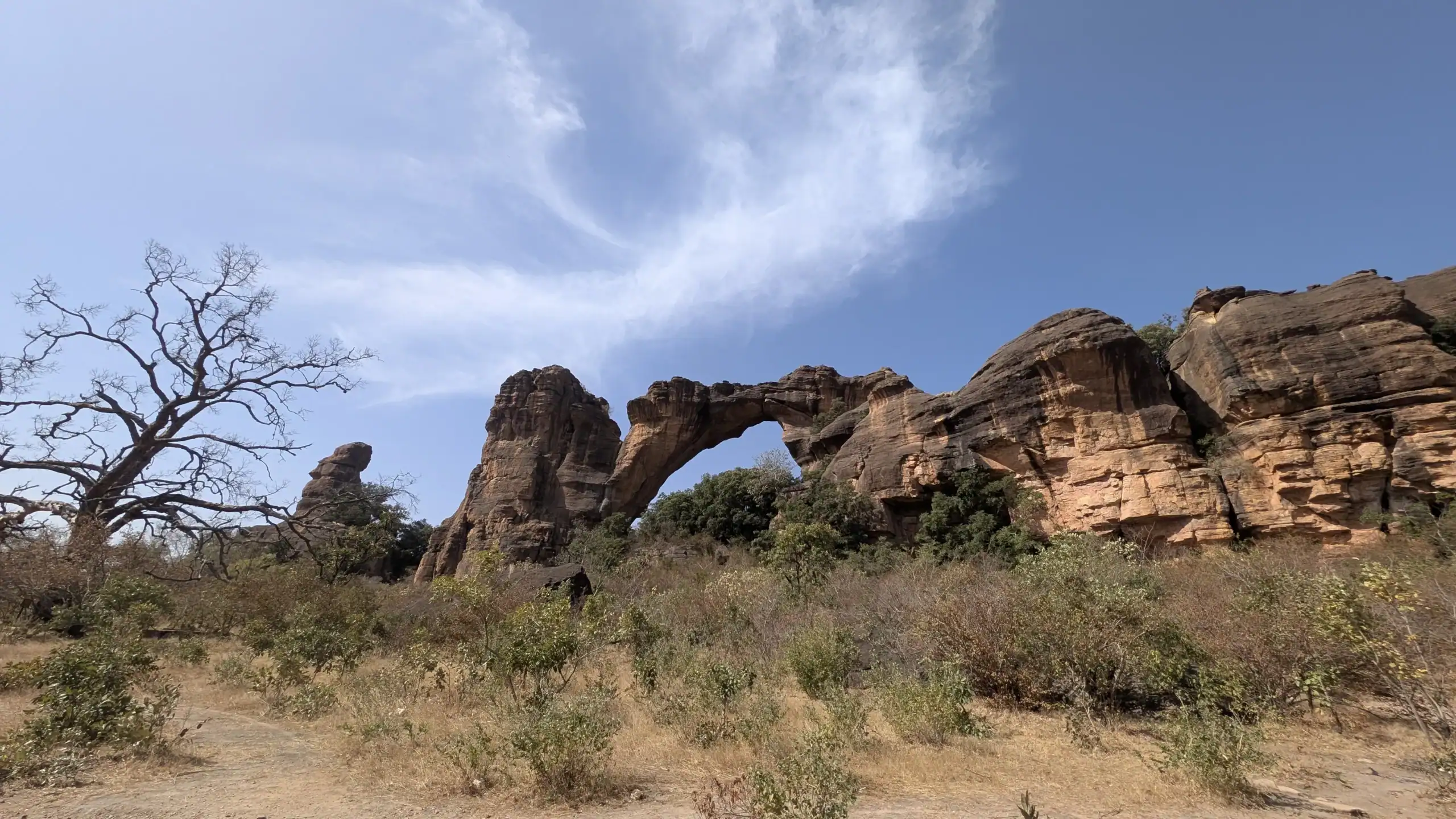
Morning after breakfast departure to Siby Manding country 60km Start the tour at Kamandjan Arch, a historical site which is a natural arch-shaped landscape carved in sandstone. The arch overlooks a massive sandstone granite and is frequented by locals and tourists.
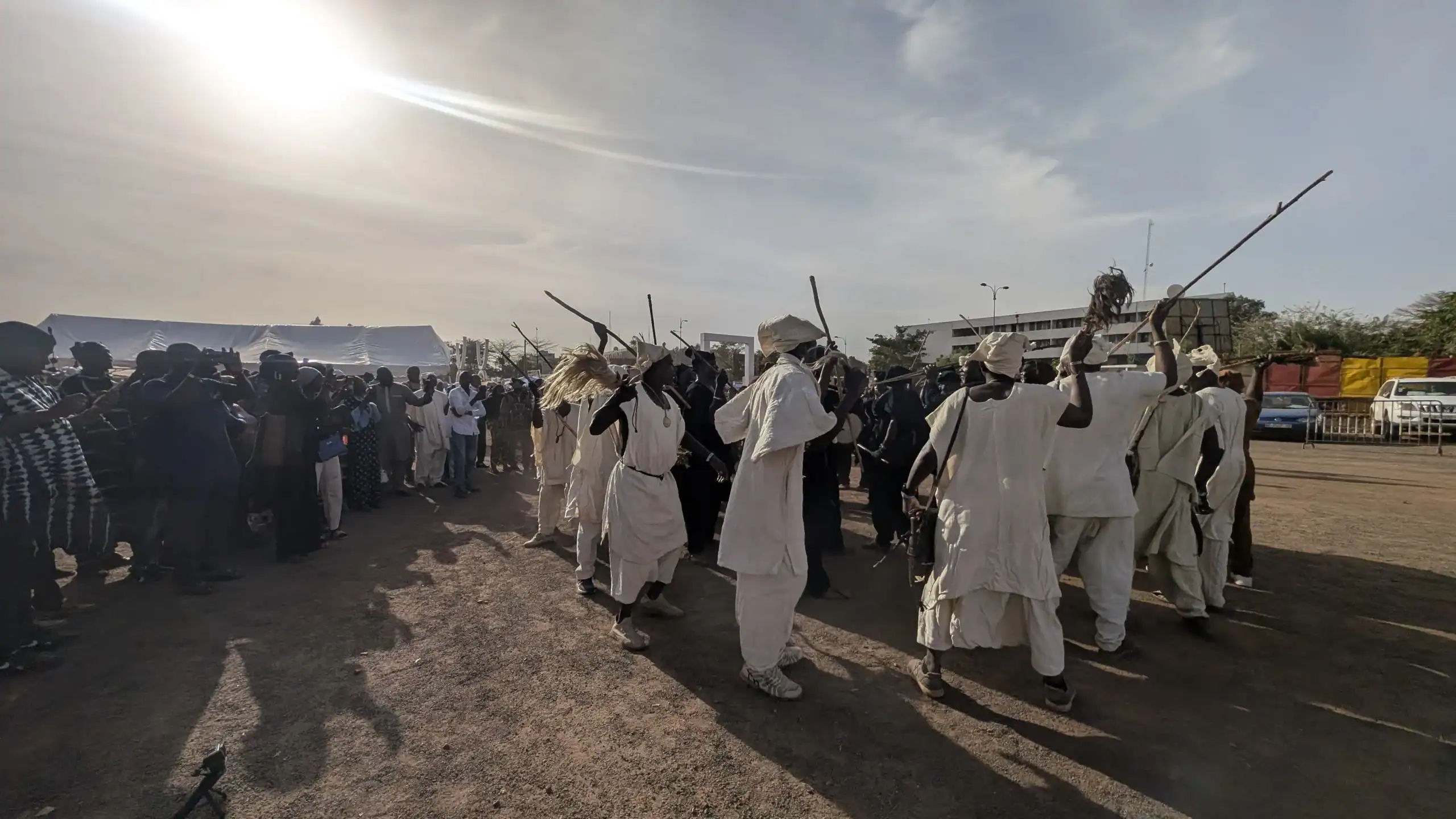
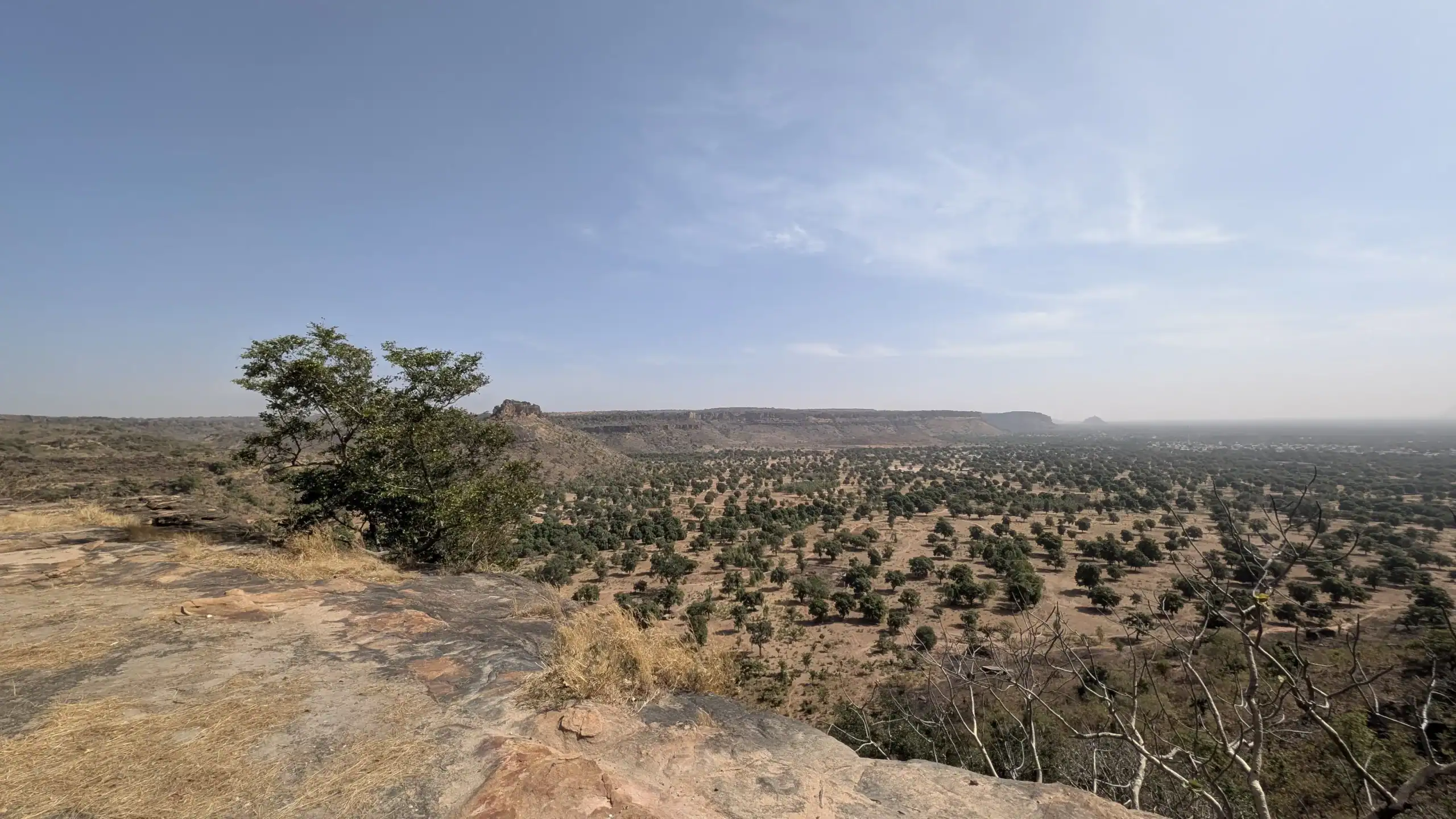
Then, get a taste of the amazing trekking experience Siby offers at Kamadjan Koulou, after lunch visit the surroundings of Siby small villages very interesting we can even organize the traditional dance of the Mandingo women with the traditional music of the Calabash.
It is also possible to organize the mask dance, in the afternoon, beautiful sunset Nuitées a Siby
Overnight: Hotel in Siby
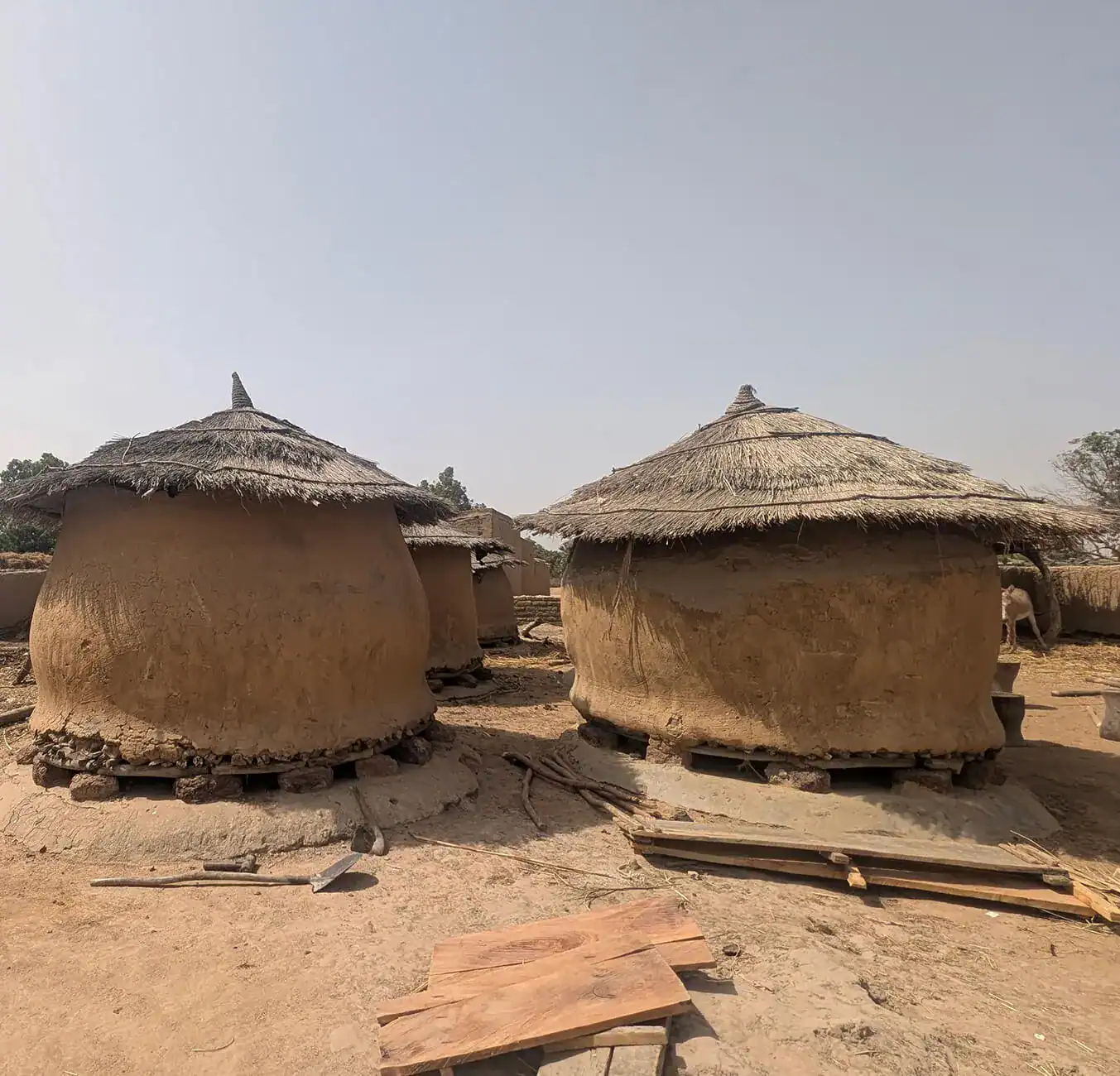
Early morning trekking takes you 7 kilometers to Djulafondo, visit the village with its very interesting architecture and the different Granaries of cereals exchange with the local population
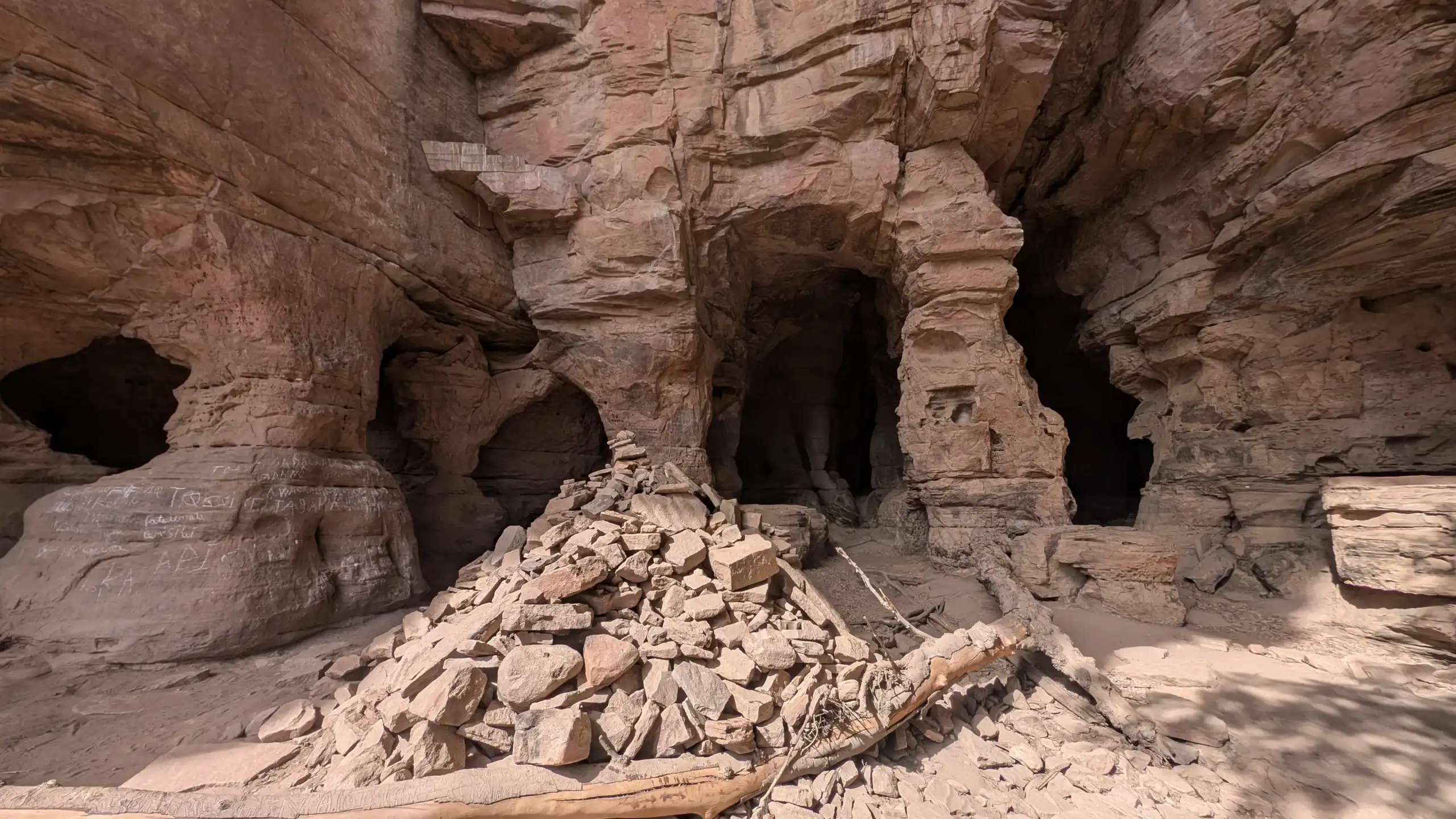
After Djulafondo continues 5km to another village Guena, Mandingo to visit the village and also in a historic Cave where the constitution was decided in 1235.
Overnight: Village stay in Guena
After breakfast depart for siby and after lunch continue directly to Banco which is 96km from siby. Visit the various gold mines. Walk along the Niger River and interact with the local population about the various opportunities.
Overnight: Banco Hotel
In the morning, visit Banco for the women who make pottery and fish on the Niger River. Pass through to Bamako, the Malian capital, and arrive directly at Koulikoro.
There are three very interesting places to visit: the natural mosque in the historic caves, the stone camels, and the collective sand fishing on the banks of the Niger River. After the visit, return to Bamako.
Overnight: Hotel in Bamako
Spend your final morning shopping in Bamako’s colorful markets for souvenirs and handmade crafts. Return to your hotel to freshen up before your transfer to the airport for your flight home.

From $3000 / Person
From $4140 / Person
From $4140 / Person
Explore other journeys available in this destination, each offering a distinct way to experience the country’s landscapes, culture, and everyday life.
