
Join Our Fixed Trip Starting Date
-
Guaranteed Available PackagesSaturdayApril 3, 2027TuesdayApril 13, 2027$300010Available
Starting in Conakry, the route leaves the coast and heads inland through Kindia, pushing upward into the Fouta Djallon highlands, linking towns like Dalaba, Doucky, and Labé, where movement and daily life are shaped by the land itself.
Beyond the highlands, the road continues across the border into Guinea-Bissau, where movement slows, and the environment softens. Gabou and Bissau carry a different cultural weight, before the route opens out into the Bijagós Archipelago, ending on the islands where time follows water and distance feels less fixed.
Arriving in Conakry, the priority is getting to the hotel and resting up. Gathering in the Guinean capital gives us time to connect and prep for the drive into the highlands.ns.
Visiting Lake Samaya and the surrounding palace structures kicks off the day, with time around the lake edges and nearby areas where locals gather, and small roadside activity unfolds. Once the visit is finished, our group stays the night in Walia, getting closer to the Fouta Djallon foothills, where the landscape begins to open, and the pace softens
After watching artisans in Kindia craft traditional bridal veils, the drive pushes up into the cooler highlands of Dalaba. It is a solid 5-hour journey up the mountains, leading to a town known for the intricately carved doors of the Casa à Palabres
Exploring Doucky reveals a remote village sitting on the edge of steep canyons. Hiking around the Fulani huts leads to rock formations where locals navigate the cliff faces using bamboo ladders.
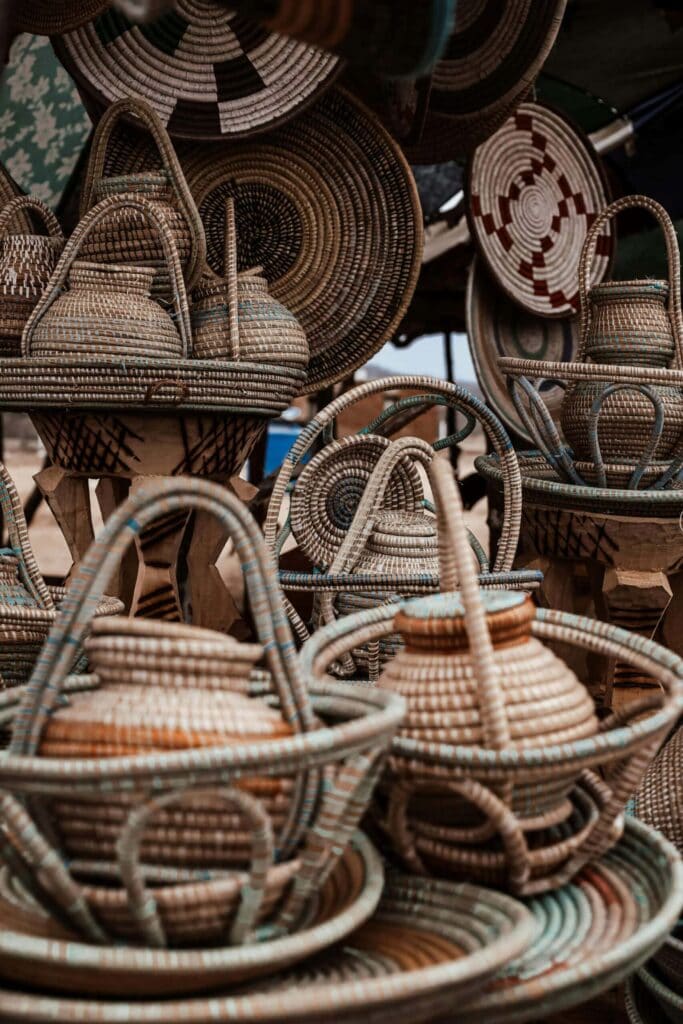
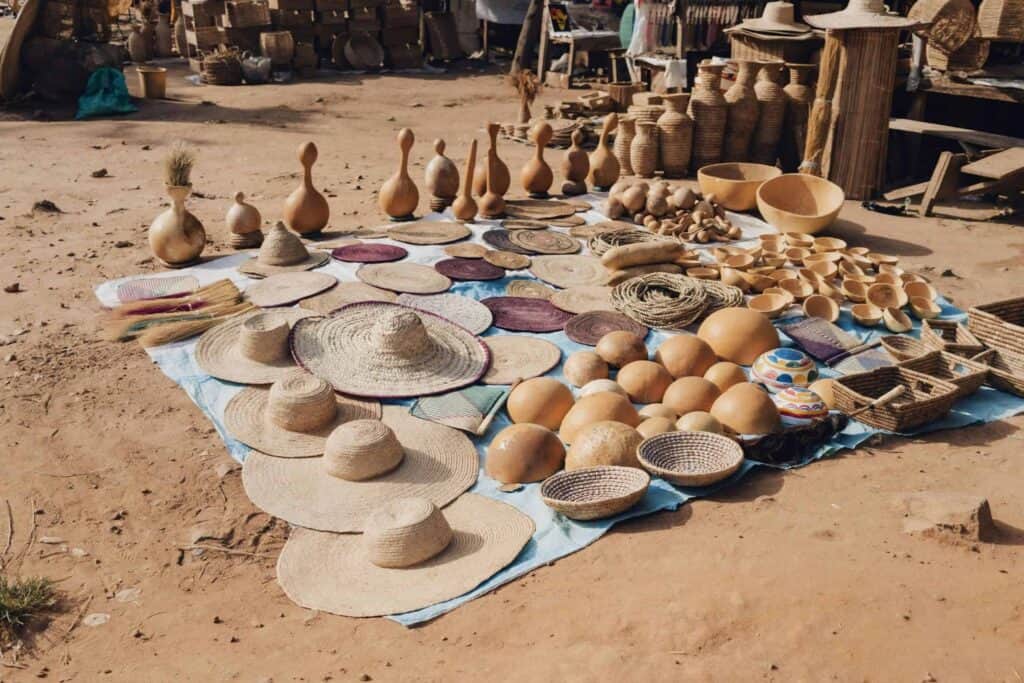
Labé serves as the region’s main commercial hub, noticeably busier with steady movement through the town. Exploring the local markets lets us check out traditional indigo-dyed lepi cloth and regional honey, with tightly packed stalls and active bargaining shaping the experience.
Crossing the border into Guinea-Bissau involves some rougher roads, taking around 6 hours. Once the paperwork in Buruntuma is finished, our night is spent in Gabou, the historic center of the old Kaabu Empire.
Meeting a Mandinka Griot community in Gabou offers a look at a storytelling ceremony that preserves their oral history. Once that is finished, a 3-hour drive brings us into the capital city of Bissau.
Visiting Quinhamel, the center for the Papel people, uncovers their animist traditions. Seeing local shrines and learning how they produce traditional sugarcane rum fills the afternoon.
Getting out of the vehicles, a private boat takes us out into the Bijagós Archipelago to stay on Bubaque Island. This shifts the trip into a completely different island rhythm.
Watching the Canhabaque traditional dance is the highlight here. Once the island performance is finished, the boat heads back to the mainland to return to Bissau.
Departure day. Flights head out of Bissau.
Price Includes
- Airport transfers
- Accomodation
- Guided experiences
- Meals per itinerary
Price Excludes
- International flights
- Travel Insurance
- Visa entry fees
- Tips and gratuities
Join Our Fixed Trip Starting Date
-
Guaranteed Available PackagesSaturdayApril 3, 2027TuesdayApril 13, 2027$300010Available
Visa requirements vary by nationality and can change, particularly as this journey moves between Guinea and Guinea-Bissau. Travelers are strongly advised to check the latest entry requirements and make any necessary arrangements before departure.
For the most up-to-date information, please review:
U.S. Embassy Guinea (Conakry)
U.S. Embassy Senegal (Dakar – provides consular services for Guinea-Bissau)
Yes. Not as a formality, but as a safety net. Medical situations, delays, or unexpected changes can happen, and having coverage makes a real difference.
The recommended option is through Allianz Travel Insurance. The plans are straightforward, and claims are easier to manage than most alternatives. It is one of those things that feels unnecessary until it is not.
Yes, travelers are advised to check with health authorities about recommended vaccinations, such as those for yellow fever and malaria prevention, before traveling to Guinea & Guinea Bissau.
Some days involve long drives, especially in Guinea. Roads into the highlands and between towns like Dalaba, Doucky, and Labé can be slow and uneven.
Once across the border, distances feel shorter, but movement still takes time. Boats into the Bijagós depend on tides and weather, so timing is not always exact.
In Conakry and Bissau, accommodation is more developed and comfortable. In the highlands, it becomes simpler and more functional, with a focus on location rather than extras.
On the islands, it is about being close to the environment. Expect clean and practical setups rather than polished finishes.
The crossing is handled as a group with local guidance. It is not complicated, but it does take time. Documents are checked carefully, and the process moves at its own pace.
Patience here makes the experience smoother.
In Conakry, the internet works but is not always stable. Moving inland, coverage drops and can disappear in parts of the Fouta Djallon.
Across Guinea-Bissau, connections remain limited, especially on the Bijagós islands.
A local SIM helps in towns, but not everywhere. For steady internet, Starlink or Google Fi (Save $60 with code: C36FUE) can make a difference if staying connected matters.
Light, breathable clothing for the heat, a scarf for dust, comfortable shoes, sun protection, and a headlamp or flashlight for low-light conditions.
Guinea uses the Guinean Franc (GNF), while Guinea-Bissau uses the West African CFA Franc (XOF).
Cash is essential across both countries. Cards are rarely accepted outside a few spots in Conakry and Bissau, and ATMs can be unreliable. Carrying enough cash, especially in smaller notes, makes daily movement much easier.
