
This journey centers on the Gerewol, a Wodaabe gathering where courtship, identity, and community come together after the rains. Young men prepare with painted faces and ornaments before entering long, rhythmic dances where endurance and presence matter more than performance. Women observe and choose, while around them, clans reconnect and life in the Sahel briefly gathers in one place.
Alongside this, we move through Agadez’s mud-built quarters and sultan’s palace, Zinder’s Birni and dye pits, and Maradi’s trade-driven markets. The route continues through Tahoua and Hausa settlements, Dogon Doutchi, where Bori ceremonies still take place, and Dosso’s old sultanate, before reaching the Kouré reserve, where the last giraffes move quietly through the Sahel.
We arrive in Niamey with the heat sitting quietly in the background, not overwhelming, just there. After the transfer, we keep things light. Maybe a short walk near the river if there’s energy, or just tea and time to settle in. Nothing forced, just letting the place meet us.
After breakfast, we get an Introduction to Niamey and Niger’s Hausa culture, then a walking tour of the central market. We then proceed to the Niger River for a canoe visit to a Zerma community. The Zerma are the ‘masters’ of the Niger River, famed fishermen and potters living along the river.
In the afternoon, we shall go through the crafts market with beautiful pieces of pottery and leather, then to the national museum and the biggest mosque of Peace. Our initiation day will end in a local restaurant to enjoy some grilled fish and couscous.
Accommodation in the Grand Hotel or Termunis.
We leave early after breakfast and head north, reaching Tahoua by late afternoon. It’s a short stop, but enough to take in the rhythm of a Sahelian town, local markets, everyday movement, and the gradual shift in landscape as we edge closer to the desert.
After a quiet night, we continue toward Agadez, the historic center of northern Niger. The change is immediate. The architecture becomes more defined, with mud-built houses, old palaces, and the Grand Mosque rising above the city
Agadez was once a key hub in trans-Saharan trade, and that history is still visible in its layout and buildings. Today, it remains a crossing point for traders and migrants moving north.
We explore the city on foot, focusing on its architecture and daily life, and spend time with members of the Tuareg community to better understand their presence and role in the region.
Overnight at Tarka Hotel.
After breakfast, we depart early and spend the afternoon visiting the cattle market. Our objective will be to observe the social environment in the most traditional part of Agadez. Tuaregs, Fulanis, and Hausas meet here to trade and socialize.
We will continue on our way to the sultan’s palace. It is an important work in the Sudanese style, but most importantly, it is still home to the city’s aristocracy. This visit will help us understand what Niger is like today, where tradition and modernity merge.
If possible, we will be received by the sultan or by a member of the royal family. Hand in hand with him, we will visit the rooms of the palace. There, we will have the opportunity to enjoy a traditional lunch. In the afternoon, we will visit the old part of the city to see other historical houses.
Accommodation in Hotel de la Paix.
After breakfast, we complete our last visit to this beautiful, mud-built city, then begin our route through the Nigerian Sahel until we reach the Fulani nomads’ camping area, also known as woodabes. We will continue to Abalak, where we will set up our camp (tents with a shower and shared bathroom).
Every year, the Woodabes nomads, together with their herds, settle near the town of Abalak to perform the Gerewol. The main objective of the ceremony is for young people to find a partner. In this great meeting of Woodabes’ clans, alliances, links, and dowries are also agreed upon.
Other ethnic groups, such as the Tuaregs, sedentary Fulanis, and Hausas, take advantage of the occasion to come to trade. It is undoubtedly the great party of the Niger, since it even has the support of the national authorities. On this first day, we will see how the young Woodabes begin preparing and decorating themselves. It will be a great opportunity to observe, photograph, or simply marvel at this unique tribal atmosphere.
Camping in tents.
Before breakfast, we can go to the nomads’ tents to see how they start the day. Here, the local tribes are open to being photographed. After all, it is a great catwalk where the boys and girls show their best clothes. We will return to our camp for breakfast with coffee, tea, eggs, bread, and fruit. It will be the big day of the festival, and we will give it our all.
At all times, the local guide will take us where the dances, ceremonies, meetings of the elderly, and songs are taking place. From his hand, we will learn the meaning of each of the actions that we will witness.
Each one of us will find their space and place in this great tribal meeting. Let’s enjoy this unique culture of the African savannah. Living
art in its purest form. Our cook will prepare the meals.
Camping in tents
After breakfast, it will be time to say goodbye to the Woodabe world. We will start the route on a poor road that leads to the town of Tahoua. It is a Hausa settlement, the majority ethnic group in Niger.
We will walk around the lake of Tablak, which features interesting birdlife and a beautiful landscape. Along our route, we will stop at nomadic camps. Once we arrive in Tahoua, we will visit the largest adobe granaries in Africa, which are true works of vernacular art.
Accommodation in Tarka Hotel.
Breakfast. We will start a long route to the south of Niger. On the way to the main road, we will stop at the historic Hausa village of Yaama. As we walk through its streets, we will discover excellent Sudanese-style architecture.
The most prominent building in the city is the main mosque, which has received the Aga Khan Award for Islamic architecture. We will have the opportunity to chat with the sultan and the nobles. We will continue with our route. On the way, we will stop for Lunch in Birni Koni, near the Nigerian border. In the afternoon, we will arrive in Dogon Doutchi, and in a popular quarter, we will experience the Boori rite of possession.
This anthropological experience is related to the Hausa’s pre-Islamic rituals and also how societies manage different types of cultural and social pressures through music, dance, and a mystic connection with the spirits. We will learn about the Boori ceremony and about Hausa traditional culture with a local specialist. After this strong experience, we will drive back to our hotel.
Accommodation in Hotel Magama
Breakfast and drive to Dosso, it is another former sultanate with an interesting palace with Hausa sgraffito. Depending on the arrival time, we can visit the Djermakoye Palace, where Sultan Djerma still lives, and also visit the palace of Dosso. Immediately afterwards, we will continue to the Kouré Giraffe Reserve, on the way to Niamey. It is a sanctuary for the last ‘white’ giraffes of the African Sahel. It is quite a miracle that they have survived desertification, poaching, and the expansion of livestock and crops. We will go on a safari through Kouré to observe these beautiful ungulates.
After a picnic lunch, we will continue to the Nigerien capital. Upon our arrival in Niamey in the afternoon, we will transfer to the hotel.
Accommodation in the Grand Hotel.
Breakfast. We will spend the morning exploring the central market. There, we will find crafts with beautiful pieces of pottery and leather. The simple but curious national museum is well worth a visit, too. Lunch, and at the indicated time, we will travel to the airport to catch our flight home
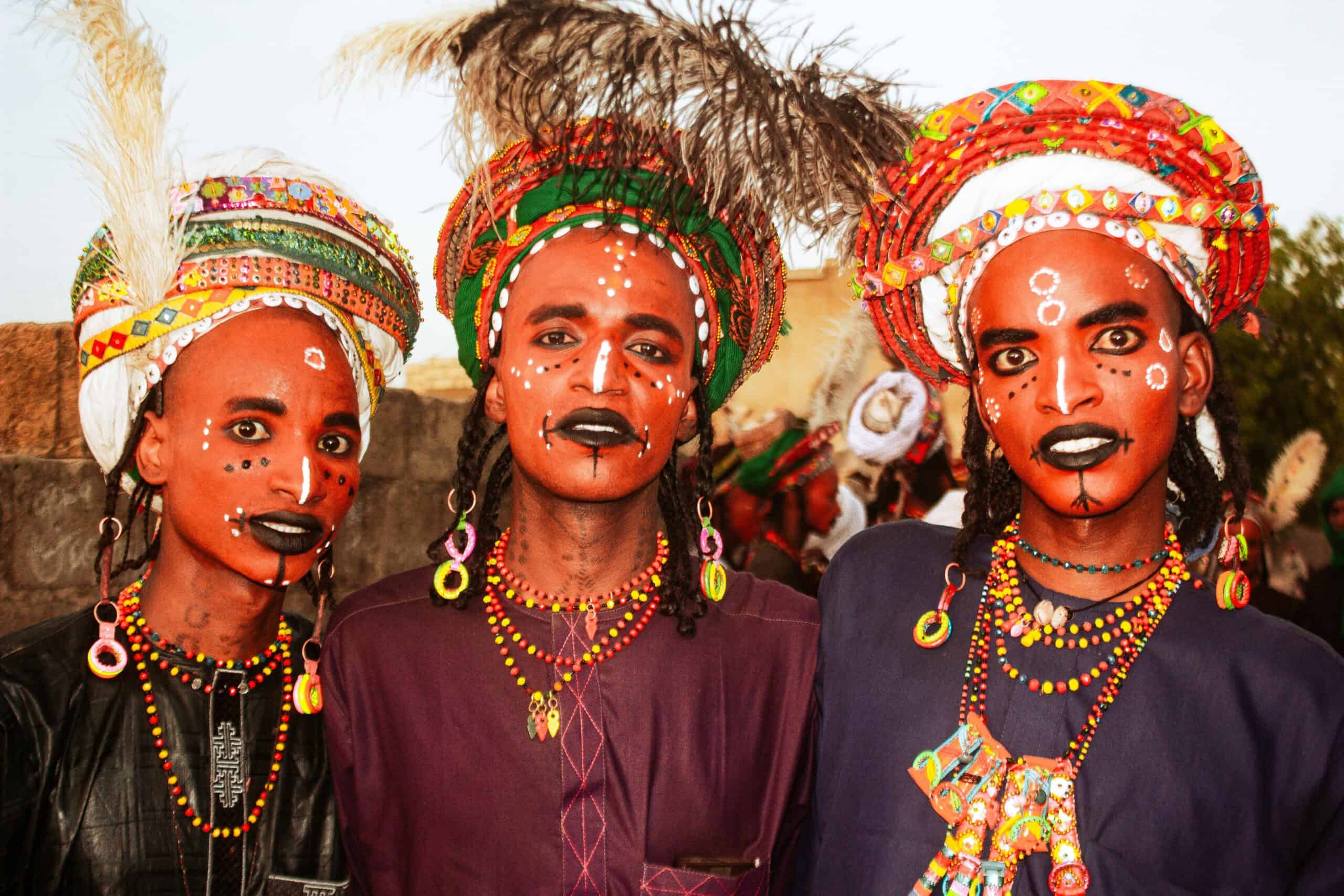
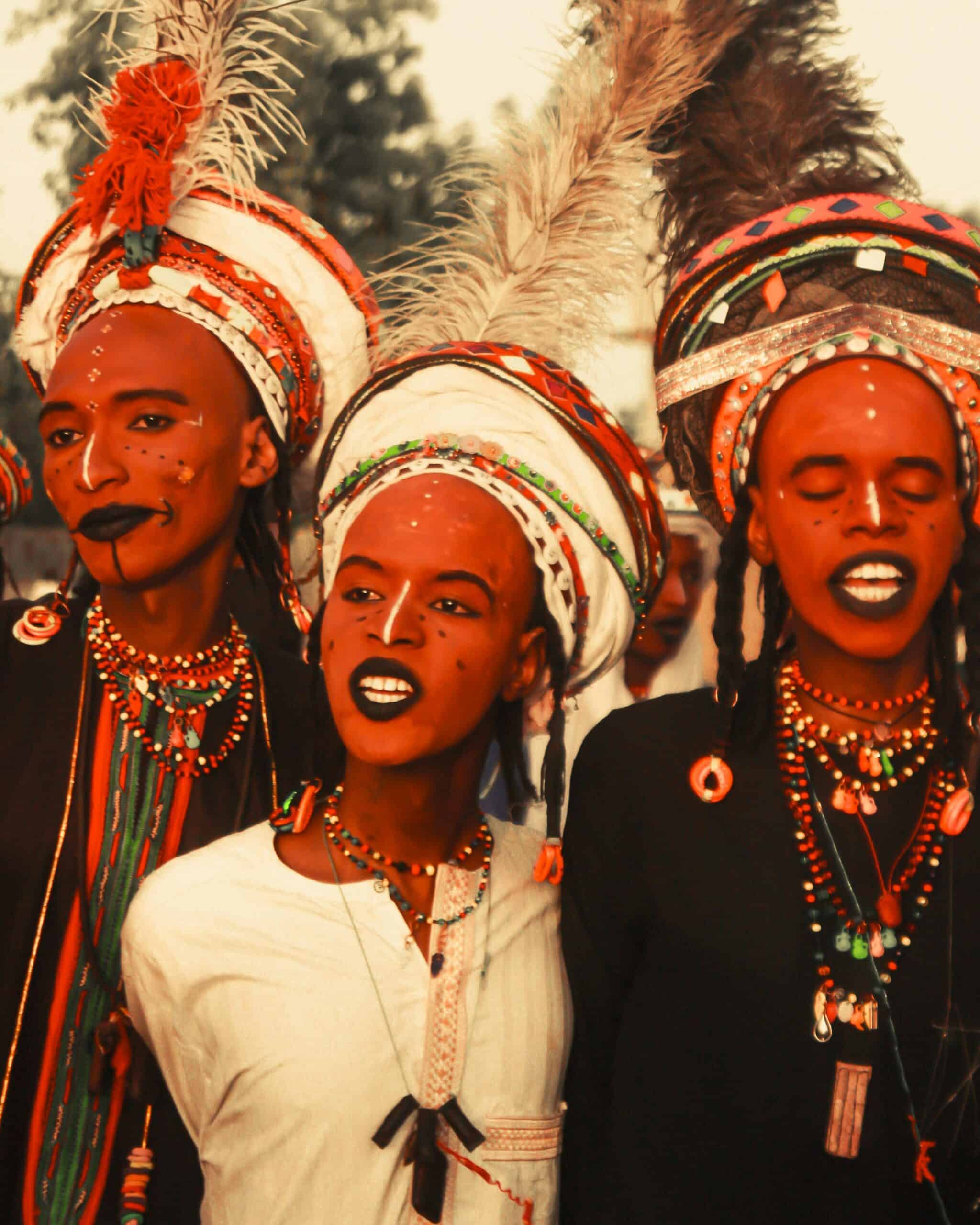
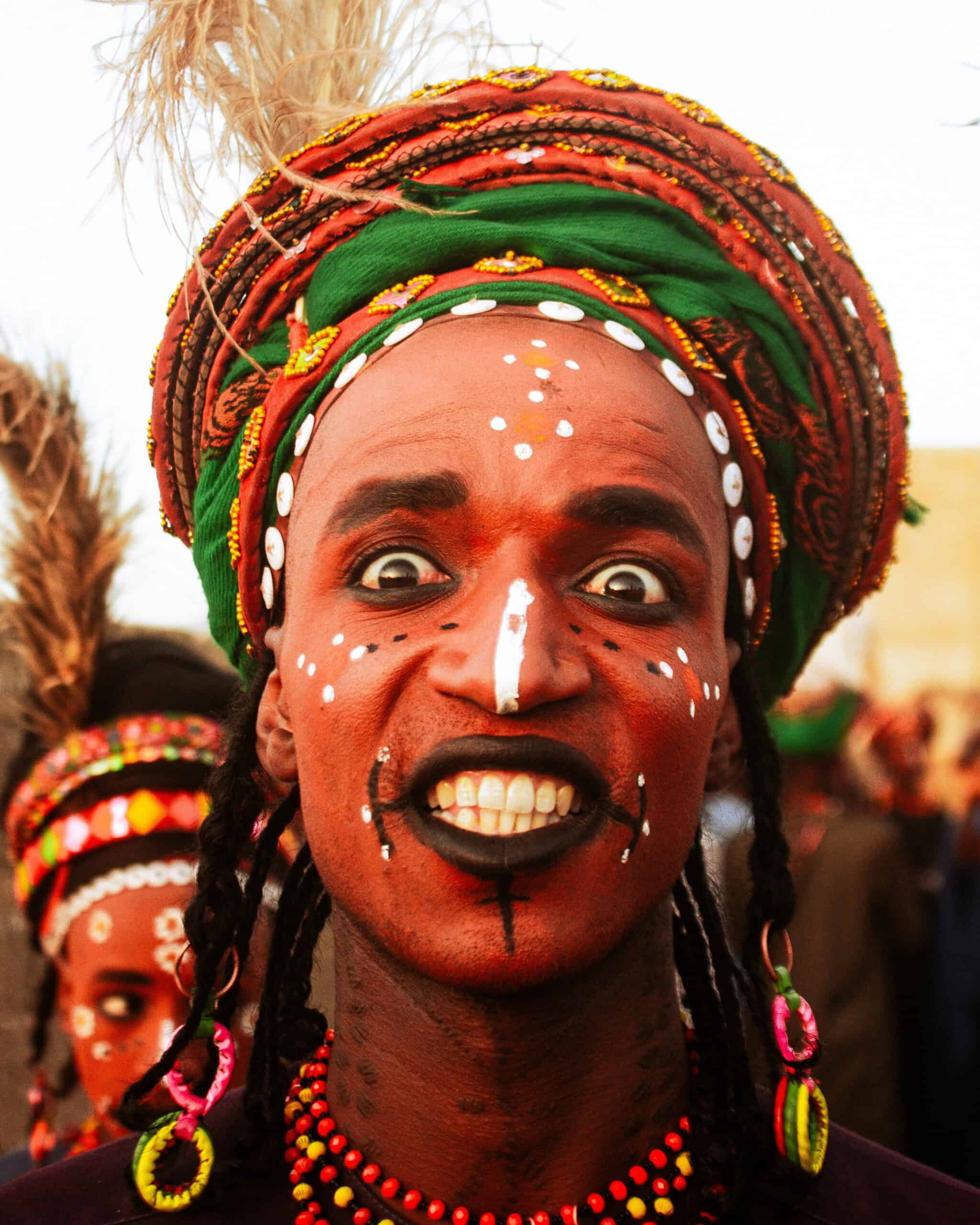
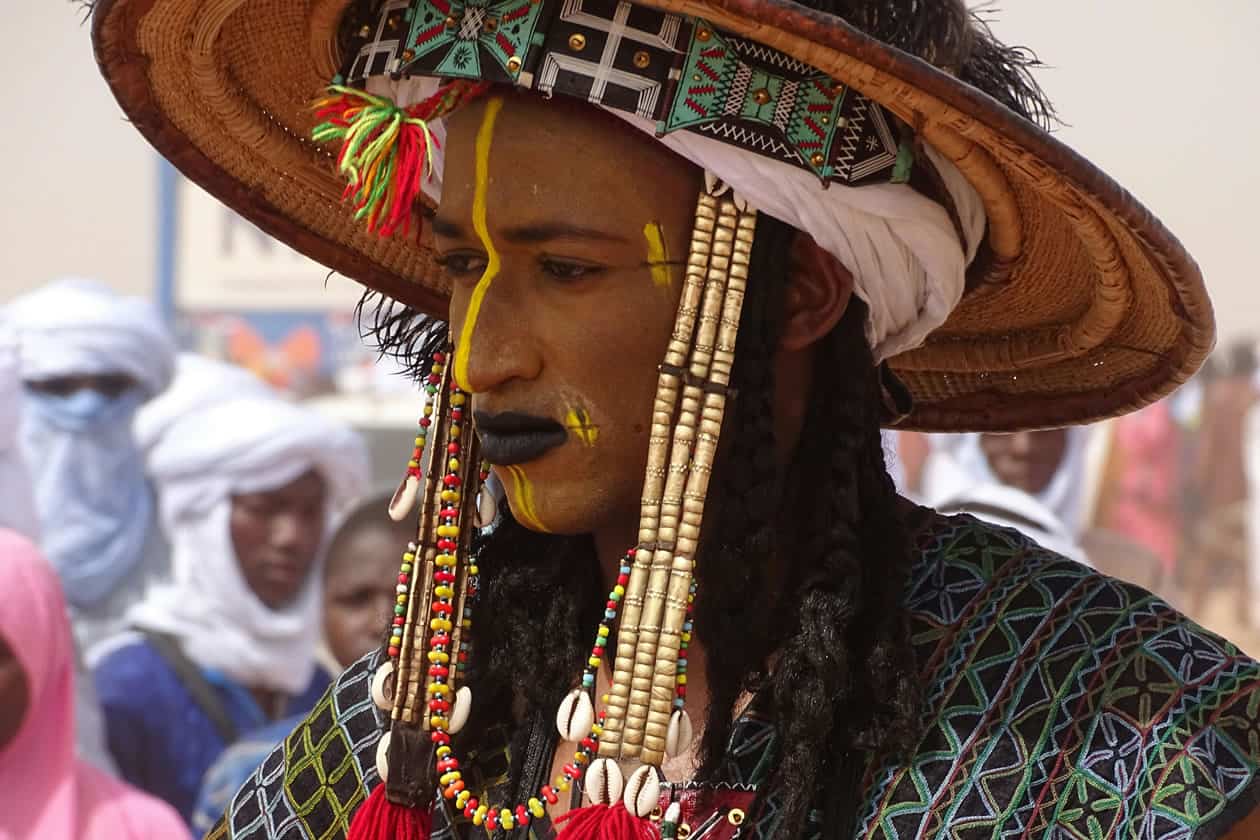
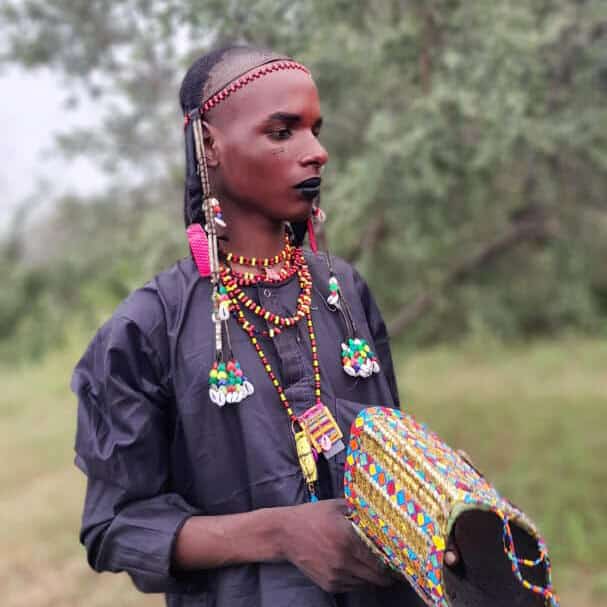
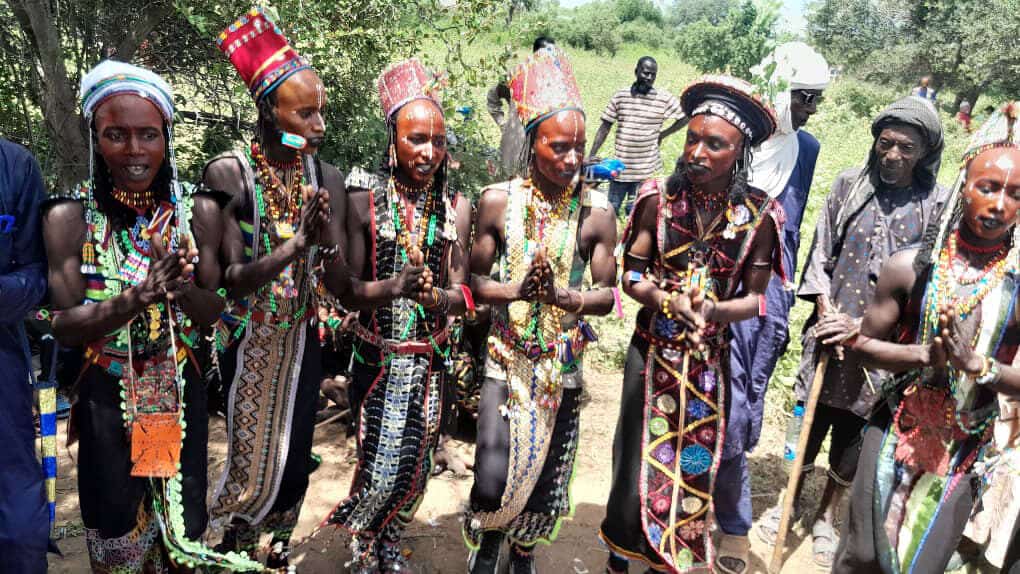
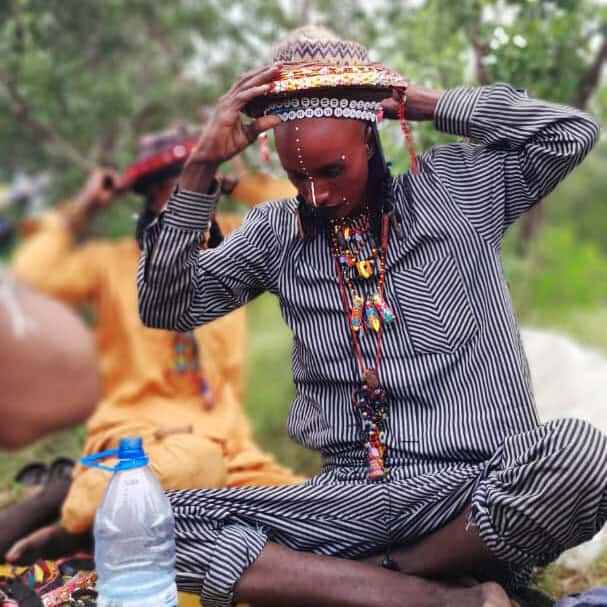
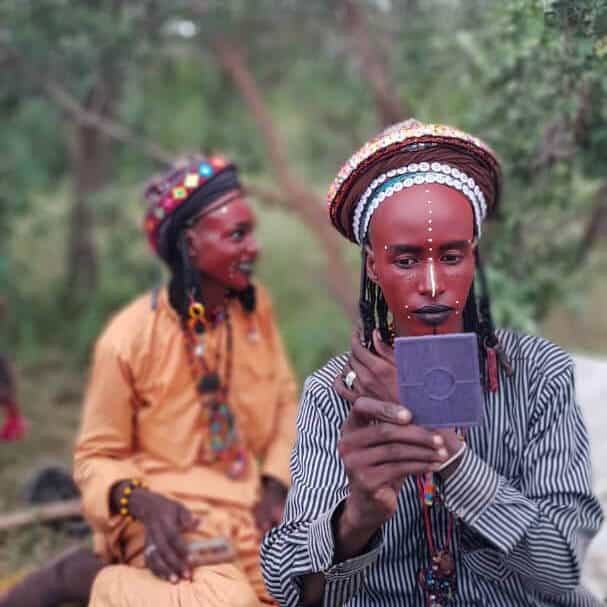
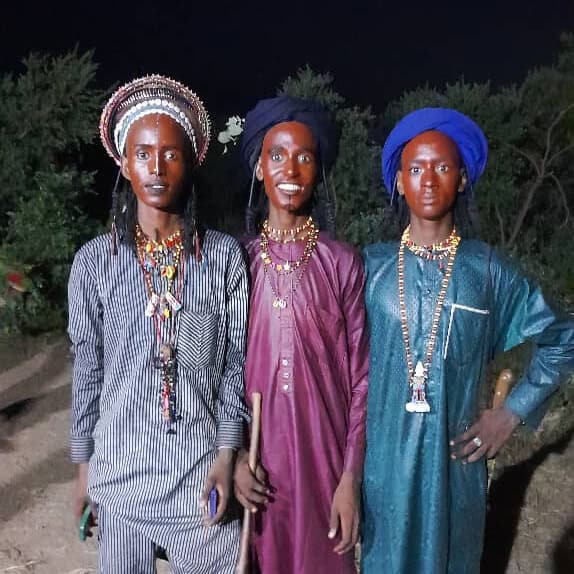
The Gerewol is a traditional courtship festival of the Wodaabe people, where men dress in elaborate attire and perform dances to attract potential partners. It’s one of the most visually striking cultural gatherings in the region.
The journey involves long drives on rough and remote roads, with some basic conditions along the way. It’s not physically intense, but it does require patience and comfort with travel overland.
Accommodation ranges from simple hotels in towns to more basic setups in remote areas. In places like Agadez, we stay in established hotels, while other nights are more functional than luxurious.
We operate with experienced local teams who understand the terrain and current conditions. Routes are carefully planned, and safety is taken seriously throughout the journey.
Yes. Time is spent with local groups, including the Tuareg and Wodaabe, in a respectful and guided way that allows for genuine interaction and understanding.
Very. Once we leave the main cities, we travel through areas where infrastructure is limited and tourism is rare. That’s part of what makes the experience what it is.
Most travelers will need a visa to enter Niger. Requirements vary by nationality, so it’s best to check in advance and allow enough time to arrange it. Visit their embassy wbsite for an online e-visa
Light, breathable clothing for the heat, a scarf for dust, comfortable shoes, sun protection, and a headlamp or flashlight for low-light conditions.
Connection is limited. In larger towns, you may get some signal, but for most of the journey, expect to be offline.
We recommend setting up a travel data plan before arrival:
Yes, travel insurance is essential for this journey.
We recommend using Allianz Travel Insurance, which covers:
You can use our Allianz partner link to get coverage suited for this trip.
From $3000 / Person
From $3000 / Person
From $3000 / Person
From $3500 / Person
From $3000 / Person
From $3000 / Person
Explore other journeys available in this destination, each offering a distinct way to experience the country’s landscapes, culture, and everyday life.
