
This itinerary centers on the 30th edition of FESPACO, the largest film festival on the continent. Our journey will take us south to the hand-painted royal courts of Tiébélé, and the desert-fringe mosques of the west serve as the backdrop for the journey. We plan to explore locations built for those who value cultural context and photography, ending among the sacred sandstone peaks of Sindou and the stillness of the most iconic landscapes in Burkina Faso.
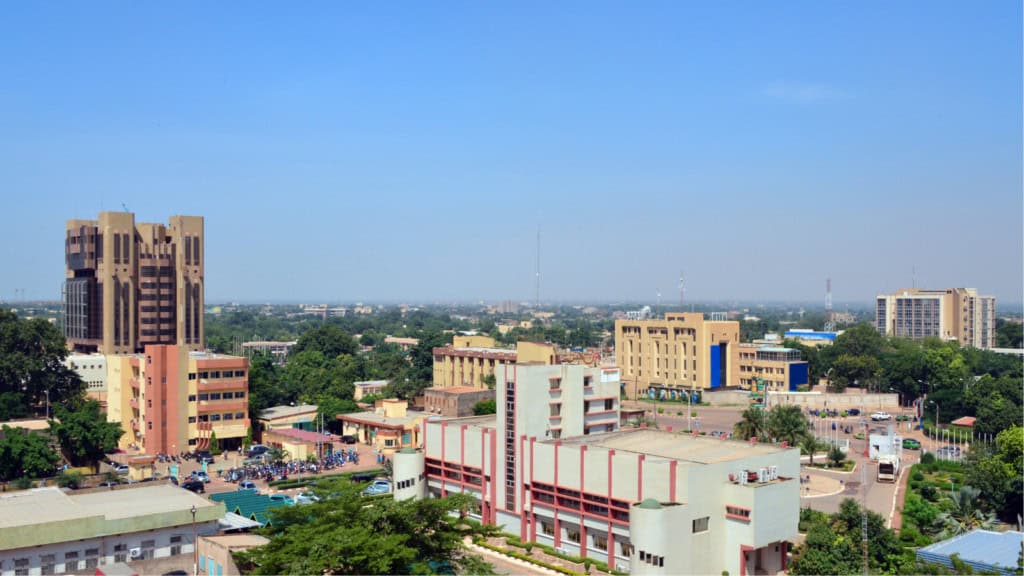
Once picked up from the airport and dropped at the hotel, if you have the energy, we plan to head out to a local cabaret for some live traditional music and dolo (local millet beer) to kick off the trip. The city is already buzzing with filmmakers arriving from across the globe.
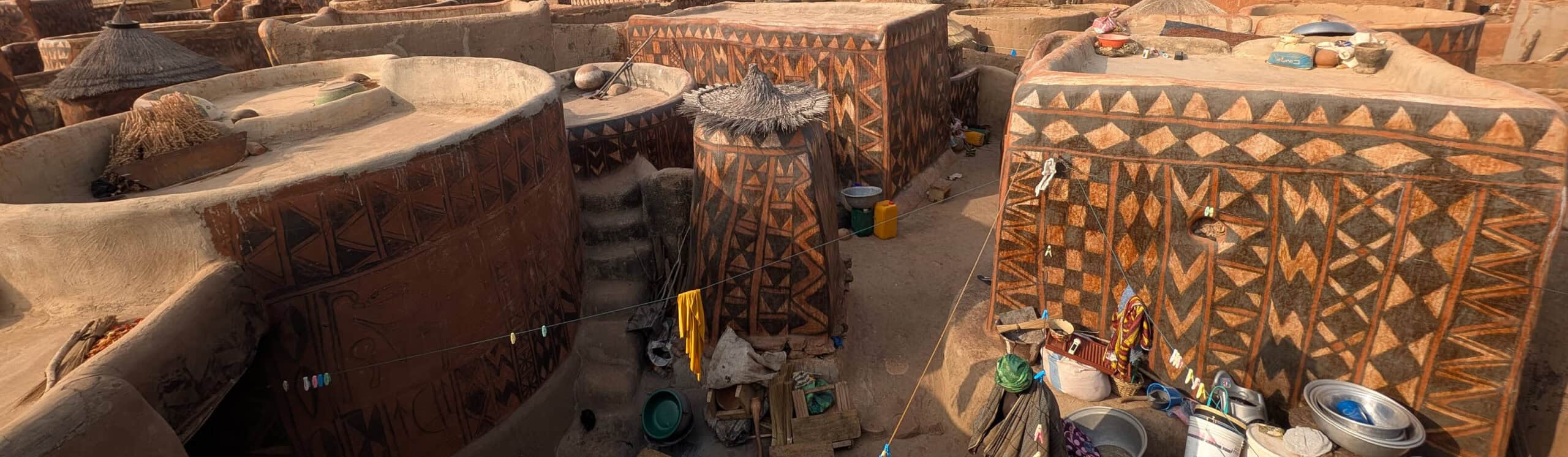
Once we head south to Tiébélé, the royal court of the Kassena people, you will explore the “tatars”, hand-painted homes decorated with intricate geometric patterns by the village women. These earthen structures are great for photos, with every wall telling a story through natural pigments. We plan to return to Ouaga for the evening.
Once the FESPACO opening ceremony kicks off at the national stadium, we dive into the heart of the festival. You are in the mix for the red carpet, the high-energy performances, and the first wave of screenings. We plan to spend the evening navigating the open-air film sets and pop-up parties that take over the city.
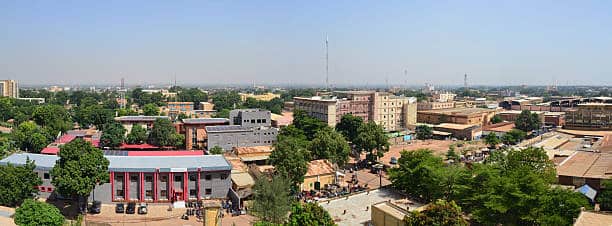
Once we drive west to Bobo-Dioulasso, the cultural capital, we visit the Grand Mosque. This is a stunning example of Sudano-Sahelian mud architecture, looking almost like a giant natural sculpture. We plan to walk the narrow alleys of the old Kibidoué quarter to see traditional blacksmiths and hear the griots playing their balafons.
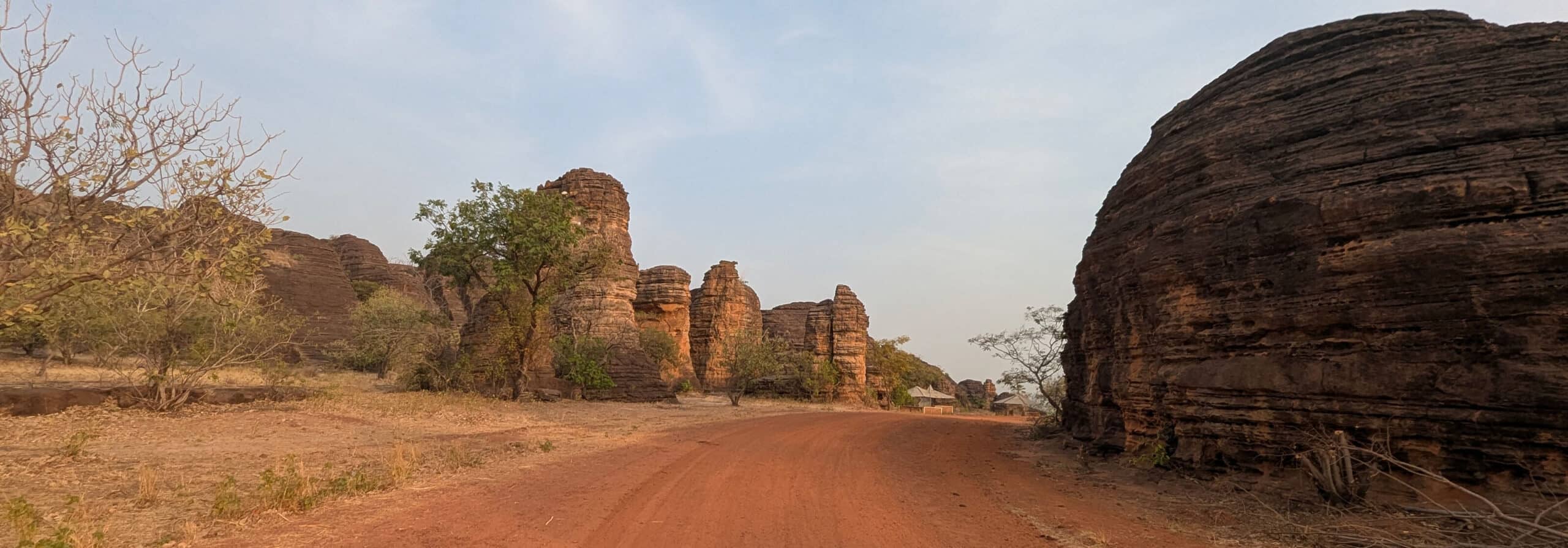
After a day in the southwest, we visit the Karfiguéla Waterfalls for a swim, then head to the Fabedougou Domes, rock formations that resemble a natural city of stone. We plan to end the day at the Sindou Peaks, hiking through jagged sandstone pinnacles that are sacred to the local Senufo people.
After finishing a morning boat trip on Lake Tengréla to spot hippopotamuses with local fishermen, we begin the drive back to Ouagadougou. We plan to stop at local roadside markets for a final taste of the countryside and photography of the vast savannah.
Once back in the capital for a final immersion in the film festival, we catch the “shortlist” screenings or a panel discussion with directors. We plan to visit the Village Artisanal de Ouagadougou to see the best bronze casters and mask makers before our celebratory farewell dinner.
Once breakfast is finished and final goodbyes are said, we head to the airport for the short flight to Accra. We leave the cinema behind to begin the next leg of the 50/54 Project in celebration of Ghana’s 70th Independence Day.
Yes, most travelers will need a visa before arrival. If you’re traveling from the U.S., you can apply through the bf.usembassy.gov/visas/. In most cases, you’ll start by completing an application form, then submit your passport, photos, travel details, and a yellow fever certificate.
Processing times vary, so it’s best to apply early to avoid last-minute stress.
We only plan trips in areas that are considered safe for travel. Routes, activities, and accommodations are selected based on current local guidance. You won’t be navigating this on your own we handle it with on-ground awareness and planning.
November to February is the most comfortable period. It’s dry, temperatures are more manageable, and moving between locations is easier.
Yes, but don’t expect it everywhere. In cities like Ouagadougou and Bobo-Dioulasso, you can get a local SIM card with reliable data at a low cost.
If you want something more consistent across different locations, it’s better to sort your connectivity before the trip. On our Affiliate page (beebstours.com/affiliates/), we’ve listed options like global data plans and satellite solutions that travelers use when moving between regions. You can go through those and apply directly so you get added benefits and discounts.
Absolutely. Many of our travelers join solo and quickly connect with the group. It’s a great way to meet people who share the same love for travel and adventure
Yes, it’s strongly recommended. Medical emergencies, delays, or cancellations can happen, and having coverage makes a big difference.
We’ve already listed reliable insurance options on our Affiliate page (beebstours.com/affiliates/), so instead of comparing random providers, you can choose one that fits your trip and apply directly through our links.
The local currency is the West African CFA franc (XOF). Cash is what you’ll use most of the time.
Cards may work in a few hotels, but don’t depend on them. ATMs are available in major cities, so plan to withdraw what you need there.
Keep it simple lightweight clothes for the heat, comfortable shoes, and modest outfits for cultural settings. Add essentials like sunscreen, insect repellent, and a hat.
All transport is arranged in advance. You’ll be using private vehicles with local drivers who know the routes, so you don’t have to figure anything out on your own
We’ve already put together the key things you’ll need internet options, travel insurance, and useful travel tools in one place.
Instead of searching around and second-guessing, just go through our Affiliate page (beebstours.com/affiliates/) and apply through the links provided. It’s faster, and in some cases, you’ll get better rates or added benefits.
From $3000 / Person
From $3000 / Person
From $3000 / Person
From $3500 / Person
From $3000 / Person
From $3000 / Person
Explore other journeys available in this destination, each offering a distinct way to experience the country’s landscapes, culture, and everyday life.
